Facing Death Over Siberia

Tags

, , , , ,

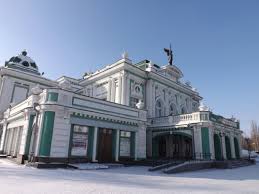
Omsk TheaterIn the spring of 1992 I had the opportunity to travel to Omsk, Russia. I was part of the advanced crew that was sent to prepare for our adaptation of OUR TOWN to be put on in the Omsk Theater in Omsk, Siberia. While there were many things that made this trip memorable, the flight from Moscow to Omsk stands out. It’s not everyday a theater nerd like me finds himself convinced he is facing death.

The Omsk Theater arranged for a cargo plane to take us from Moscow to Omsk. We were assured that the cargo plane would be empty. They even said that the Omsk company masseuse would make the flight with us.

We learned quickly there were not going to be any in flight massages. There was no room. The cargo plane was in fact filled with cargo. Two cars, to be exact, filled the plane from cockpit to tail. The cars were pressed up against one side of the plane and on the other side were fold out wooded benches that had plenty of knee room if you were an emaciated 12 year old. None of us were. The Russian crew proceeded to load us into the cars for the trip. Picture if you will, three large Americans crammed into the back seat of a European sized car. That was the day I discovered I had claustrophobia. As the panic started to set in I calmly (that’s my story and I’m sticking to it) told them I had to get out of the car. I elected the lack of legroom over the lack of oxygen. So there I sat, with my knees pressed firmly into the side of the second car.

The Russian crew sat in the front smoking. About halfway through the flight we smelled gas. It became very overpowering. With the help of our interpreter we told them about the gas smell. With a heavy sigh, one of the Russians finally stood and headed to the back of the plane, his lit cigarette still dangling from his lips. It was at that perfect moment when I knew that this is how my story was going to end: in a giant ball of flame over the Siberian wilderness. Who would have guessed that I would go out in such a dramatic fashion? A faulty trap door in a set, I could see. A Phantom style falling chandelier would make sense. Getting a job on Spiderman the musical could be fatal. But going out in a giant ball of flame high over the Siberian wilderness was not something I’d worried about before.

Since you are reading this you’ve already guessed. We did not go up in a giant ball of flame. In fact it was all a bit anticlimactic. The Russian crew member calmly stuffed a rag in the hole that was supposed to have a gas cap. He went back to his fellow Russians, probably wondering why the Americans all looked so freaked out. What was for us a life threatening moment, was for him an interruption in his break.

Always Root For The Home Team?

Tags

, , ,

When I moved from Milwaukee, Wisconsin to the North East I was presented with some big questions. Not the least of which is what baseball team do I follow. The Milwaukee Brewers have been my baseball home for decades. For most of my life I lived on Brewer brats with “secret stadium sauce”. I watched Milwaukee’s mascot, Bernie Brewer, slide his way into a vat of beer with each Brewer home run. I cheered during the big sausage race during the 7th inning stretch.

In 1987 I gladly stood in line as George Webb gave away free burgers in response to a Brewers 12 game wining streak. I sat in the stands on September 26, 2000 for the last night game in County Stadium and “oohed and aahed” at the fireworks display after the 4-7 win over the Reds. Let us not talk about the 8-1 loss on the last daytime game a couple of days later. During my married years the Brewers were as big a part of our lives as anything else. It was a fandom we shared. After my divorce the Brewers were a solace when they won and a distraction when they lost.

But baseball is a game that must be seen in person. Its poetry does not translate onto the TV. The cameras tell you where to look. You are forced to focus on the pitcher then the batter, then the fielders; where ever the ball travels. Baseball is more ballet than sport. One must observe the movement of the players as a whole. How do the outfielders move in anticipation of a hit? Do the infielders adjust based on what they know about the person at the plate? The potential energy builds in intensity until the crack of the bat. In a kinetic burst all ten players on the field leap into action at once.

Football is more of a television sport so the Packers are safe with my loyalty. I need the help of the camera to keep up with football. In the stands, even if you have good seats, for most of the game the players are far away and become just a mass of helmets moving back and forth. But the Brew Crew is in danger of loosing me.

One of my favorite things to do was to spontaneously hop a bus and head out for a game. That’s a little harder to do now that the stadium is 1200 miles away. Boston is only two and a half hours away so the Red Sox may be my new team. But does that make me a turncoat? I’ll be keeping my eye on Boston this season but I’m sure my heart will still flutter a bit with each Brewer win. I guess that makes me a Brewer ex-pat that roots for the Red Sox.
http://en.wikipedia.org/wiki/George_Webb_Restaurants

Motorcycles And Cars Need To Share The Roads

Tags

, , , , ,

Well it’s that time of year again. Motorcycles are back on the roads and they need to share the space with cars. It can be tricky for car drivers in the spring to remember that not all vehicles on the road are their size. They’ve had all winter to dominate the highways. There is a learning curve every season for both cars and motorcycles. Here are a few simple steps to keep everyone safe.

For car drivers:

• Be aware that motorcycles are back on the road. Just as looking out for young kids near schools keeps children safe so does keeping an eye out for smaller vehicles.
• If you would not pass a car, don’t pass the bike. Sure, bikes look like they take up less room on the road, but trying to zip pass them in their lane is a sure way to hurt someone.
• Avoid falling into autopilot on your regular routs. Think about the times you’ve arrived home after work and have thought to yourself “gee, I don’t even remember the drive home.” This wandering mind syndrome is dangerous, especially to vehicles you do not expect to see.
• Do not tailgate! Okay I admit this is a pet peeve of mine. It bothers me when I’m in a car, but when I’m on my bike it drives me crazy. I do not believe that wherever you have to go it is worth risking my life to get there. An easy way to tell if you’ve left enough space is to use the two-second rule. As the vehicle in front of you passes an object, it should take your vehicle a solid two seconds to reach that object.

For Motorcycle riders:

• Do not assume you are visible. There is a bit of a learning curve at the beginning of the season for car drivers. Often they just do not see you. You know yourself how easy it is to fall into autopilot when driving on four wheels. It does not require the same amount of concentration.
• Drive defensively: Motorcycles well always lose in a battle with cars. No matter what your nature, it’s best to be a somewhat passive rider. Sure, when you are cut off, or pushed to the shoulder by an unaware car it’s easy to want to push back but don’t. You well lose. Even a Smart car can take you out.
• Make noise- use your horn. There is truth to the biker’s adage “If they can’t see me, they’ll hear me.” If you find yourself near a car that just does not see you, get their attention by using your horn. I’ve woken up a couple of drivers trying to fade into my lane that way.
• Do not tailgate! Remember, you can’t stop as fast as a car if you want to remain upright. Also, if you find that a car is crowding you, pull over and let them pass. Wherever you are going it is not worth dying to get there 10 seconds earlier.

In short, just being aware can save a few lives and keep your insurance premiums down. We all have places to get to so let’s work together to get there safely.

A Hoarder On The Move

Tags

, , ,

At the age of fifty-six I found myself preparing to move from Wisconsin to New Hampshire. This upcoming adventure of changing my life was looking to be an exciting time. Until I looked around the apartment I’d been living in for almost two decades. How could one person have gathered so much stuff into a small one-bedroom place? There were boxes lining the hallway, some of which had not been opened in over twenty years. There was no flat surface left uncovered by the piles on top of piles of stuff that I must have thought were crucial to my survival at one time. There was not a drawer or shelf that had escaped dangerous overloading. Fibber McGee’s closet was a wasteland compared to mine. I did not even want to think about the garage or storage space I also had overflowing with stuff. When had I become a hoarder? Over forty years of accumulation (I’m pretty sure I escaped hording for my first ten years or so) were staring me in the face, daring me to move it all 1200 miles east.

So I decided to purge myself of my belongings. I planned on being ruthless in my cleansing process. I’d like to say this idea came form a newfound Buddhist philosophy of shedding my dependence on things. Taking myself into my new chapter of life with less baggage allowing for a cleaner life style. I’d like to say that was my motivation but in truth, I just could not see physically moving all that stuff half way across the country. So I made it my goal to take only what I could carry in the back of my car.

That meant, of course, that I was going to have to exclude most of my things from the trip. Or get a larger car. So how do I chose what is worthy of space in my SUV? Furniture was my first consideration. The couch was what was left of a past life marriage. The coffee table lived on the streets for a short time before joining me. My dressers all had crippled joints. None of my furniture stood muster. Only the bed was regrettably left behind. I just could not see cruising along the highways with a queen-sized mattress and box spring strapped to the top of the car. Every box had to be gone through, every memory had to be weighed but over the course of a week I was able to pack up my books, DVD’s, clothing, and what little “junk drawer” extra items I was keeping. (Side note; I had ten boxes of DVD’s and one of photos. I know what’s important.)

And then the junk men came.

As self-imposed surrealistic events go, watching four large men carry away everything you once thought was important and toss it unceremoniously into a truck, is right up there on the Salvador Dali scale. It took about four hours to cart away Fifty-Six years of my life. Some of it destined to be sold. Some of it destined to be donated. But most of it headed to that great junk heap in the sky. I stood there watching my life being carted away like so much trash. Shortly after that I hopped into my fully loaded car and headed into the rising sun, ready to begin collecting my next life’s pile of stuff.

Top Ten Theatrical Superstitions

Tags

,

Putting on a play takes a lot of hard work by many talented people. In addition to all the blood, sweat, and tears that go into producing a play a large dose of good luck helps. The following is a list of the ten most common superstitions to be aware of when staging a play.

1. The Scottish Play:

Shakespeare’s Macbeth is cursed. It is so cursed that even mentioning the play by name can bring misfortune. Most performers call it “The Scottish Play,” in reference to its setting. This particular superstition is so prevalent that most people don’t think twice about observing it. Shakespeare may as well have named his play “The Scottish Play” in the first place and saved us all the bother.

2. Quoting from “The Scottish Play:”

In addition to the name of the play being verboten, quoting lines out of context is bad luck. Years ago there was a commercial that used some of the queen’s speech to tell you what their soap could do. It made me cringe every time.

3. Break A Leg:

As a rule, a positive expression of well wishing is not a good idea before the show. Instead most people will say, “Break a leg” or “Merde.” Much like saying “Nothing can go wrong now.” Just before your wedding. It’s just not a good idea to temp fate. We all know that life loves irony.

4. Whistling:

Whistling backstage, or in the dressing rooms, is in bad form. In addition to being bad luck, actors have a set routine that they need to adhere to before going out on stage. Many times that routine includes quiet contemplation, not suddenly having your off key version of “It’s a small world” running through their brain.

5. Peacock Feathers:

Sets should never be dressed with Peacock Feathers. These colorful feathers bring with them a lot of bad luck. In addition to being unlucky, several angry peacocks are left unable to get a date.

6. Bad Dress equals Good Opening:

This is a phrase you’ll hear backstage after most final dress rehearsals. If the audience does not respond as hoped, or there are problems during the show all we have left is the hope that this mantra proves true.

7. The Second Show Blues:

With the pressure off, after opening night has come and gone, sometimes people relax the next day and things get sloppy. I’m sure the opening night party has nothing to do with it.

8. Saying the last line of the play without an audience present:

Between the director, assistant director, stage managers, and understudies there is almost always an audience present. From the first day of rehearsal somebody is always watching the actors perform so this one rarely comes up.

9. Curtain Call staging:

The curtain call should not be staged before the first dress rehearsal. Superstitions notwithstanding, curtain calls tend to be the last thing on the “need to do list.”

10. Ghost light

Yes, theaters are haunted; and apparently by ghosts who are afraid of the dark. The last thing to happen is the setting of the ghost light. This is a single bulb on a metal post that sits onstage. This nightlight for the spirits has the added benefit of letting the living find the light switch the next day.

Getting Your Motorcycle Ready To Ride

Tags

, , , ,

That glorious time is finally here for those of us living in the north. The snow has receded, the temperatures have risen and the call of the open road is upon us. Time to put away the snowshoes and get those motorcycles ready for the riding.

And I know, the pull to get up and running quickly is a strong force. That first trip out with the bike after months of anticipation is possibly the best feeling in the world. I look forward each year to that first taste of the open road. It is, in a word, magical. But there are some things that you must take care of before that first ride. If you do you’ll have a longer, less mechanically fraught, season on the road. Please note: This advice is for air-cooled bikes. I’ve never owned a water-cooled motorcycle. There may be additional steps to take for those bikes.

Here are the few steps you should take before hitting the road.

1) Uncover and wash the bike. Even a bike that has been covered all winter can get mucked up. Dust works it’s way around tarps, and small animals and bugs sometimes find a warm winter home under such protection. Dirt of any kind can speed the spread of rust, giving moisture a place to take hold. Detailing you’re bike at the start of the season also gives you a chance to check the torque of some of the more crucial nuts and bolts. Remember, it’s your safety that is on the line. It’s much better to find a loose bolt sitting in your garage rather than at 50 MPH in the middle of nowhere.

2) Change the oil and filter. Oil separates during long periods of idleness. Synthetic oils supposedly don’t separate as quickly as standard oil, but why take the chance. Oil is the lifeblood of any combustion engine. I generally prefer a synthetic oil to the natural stuff because I feel it does its job better. Decide for yourself what works best, or consult a mechanic. It is also very important that you change the oil filter whenever you change the oil. After months of stagnating in freezing temperatures, your oil has lost its chemical ability to lubricate. Many bikers (and I’m one of them) also change the oil at the end of the season. Some find that excessive but I can’t help but think of all the particles that the dirty oil gathered up just settling at the bottom of my engine. Makes me squirm.

3) Check and or charge your battery. I like to keep a low voltage trickle charger on my battery all winter. This way I can keep the battery in the bike and it stays warm enough so as not to freeze. If you’ve removed your battery and taken it inside it’s a good idea to check its charge before installing it just to be sure. A battery that has been sitting ideal all winter, even in a warm basement, can still loose its charge. Put the battery on a charger (keep in mind most bike batteries are 6 volt, not 12 volt). Check the battery again after charging. If it does not hold the charge, you most likely are going to need a new one.

Once those simple steps are done it is time to take the bike out on the road. Go slow at first, just to get your sea legs back. Remember, you’ve been sitting idle all winter also.
Once you get yourself back up to speed you’ll be ready to enjoy the freedom of the open road and a bike you can feel safe on.